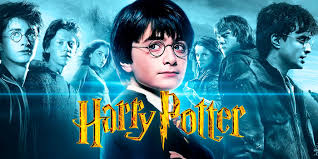
J.K. Rowling’s seven
Harry Potter
novels (1997-2007) have been received worldwide in the twenty first century whosemajority of the inhabitants is being targeted with day-by-day advances of technology and pushing deep down into acommon kind of materialism. It is therefore of tremendous relief to announce that the mentioned series of novels havehit the market as blockbusters or even monetary phenomena, as some critics claim, and successfully pulled out manychildren and adults from the described descent of automation. The proof to the claim, according to Operah Winfrey(2013), is manifest in the novels’ translation into more than sixty nine languages in approximately two hundredcountries worldwide under the titles:
Harry Potter and the Philosopher’s Stone
(1997) referred to in this study as
HPS
,
Harry Potter and the Chamber of Secrets
(1998,
HCS
),
Harry Potter and the Prisoner of Azkaban
(1999,
HPA
),
Harry Potter and the Goblet of Fire
(2000,
HGF
),
Harry Potter and the Order of the Phoenix
(2003,
HOP
), Harry
Potter andthe Half-Blood Prince
(2005,
HHP
), and finally
Harry Potter and the Deathly Hallows
(2007,
HDH
).
The novels as objects of cultural phenomena are presumed to be more than merely representatives of the children’sliterature of escape and commercialism. In order to meet such expectation, papers and books have been written touchingupon different aspects which lead to a better exploration of the series’ depth and a profound understanding of thethemes. Among the most significant contributions, the followings can be mentioned: Biswas’s exploration of magicrealism in the series, Cherland’s detection of discourse of gender, Natov’s searching for the ordinariness in theextraordinary nature of the novels, Krueger-Kischak’s discovering the allusions to God and the concept of love,Stojilkov’s theory of the immortality of love in
Harry Potter
(1997-2007), and many different other perspectives thathave been taken into account regarding the series. The significance of this research study is to hopingly contain a newapproach different from the ones made so far which contributes to the weight of the existing researches on the
Harry Potter
(1997-2007) series through juxtaposing the magical world of Harry with the idealistic one of Jorge Luis Borges’sTlon which has not been dealt with previously and can be considered as original in choosing idealism for itsmethodology.Whether or not Rowling had been bearing particular objectives in mind while writing the pages rather than assuminglystriking it rich, it is of importance to elaborate on some of the novels’ themes and possible associations; Furthermore,the excavation of the metaphysical perspectives can lead to a contemporary re-presenation and elucidation of whattraditional philosophy and literature have stored in repertoire
- One can consider the fantasy novels of
- Harry Potter
(1997-2007) as magic real
Magic realism is a fictional technique that combines fantasy with raw physical reality or social realityin a search for truth beyond that available from the surface of everyday life. The startling irony behindthis is that only through the conjunction of the fantastic and the factual can truth fully emerge inliterature (Mellen, 2000, p.1).
Applying the mentioned features to Rowling’s case,
Harry Potter
(1997-2007) while being a fantastical writing piecerife with mysterious and adventurous events embedded in the plot can be regarded as an attempt of the author probinginto the mysteries of life and human interpersonal and intrapersonal relationships which most importantly convey socialimplications at the same time, particularly in children’s society. As for the metaphysical part of the story, one cannotdeny the significance and power of love as a driving force for its being the ultimate truth within and without the contextin all the seven works. Critic Leal (2005) in his essay focuses on such sort of seeing beyond:
In magical realism key events have no logical or psychological explanation. The magical realist doesnot try to copy the surrounding reality (as the realists did) or to wound it (as the surrealists did) but toseize the mystery that breathes behind things (p.123).
Enhancing the realistic load of the series in line with the mysteries of life, namely love, Gupta (2003) maintains that thetext-to-world reading of the series evokes three different worlds; that of the magic world which cannot be perceived bythe non-magical people and is resided by Harry and his fellow wizards and witches all through school year, the Muggleworld in which non-magical human beings such as Harry’s aunt and her family reside, and our world as the readers (pp.86-91). This is the particular connection between and fusion of realism and magic to be relied upon in application ofidealism to the series:
In Rowling’s stories, the interpenetration of the two worlds suggests the way in which we live, notonly in childhood, though especially so _ on more than one plane, with the life of the imagination anddaily life moving in and out of our consciousness. The two realms, characterized in literature as thegenres of romance and realism, are located in the imagination, which is, always, created by and rootedin the details of everyday life. (Natov, 2001, p. 314)Consequently, and in spite of all the existing critics’ condemnation of the books for their being a quilt of imitation fromclassic children’s stories, the achieved success due to its activating the minds of the readers in trying to find therelations to whatever humanistic notions is of noteworthiness

 Site Title